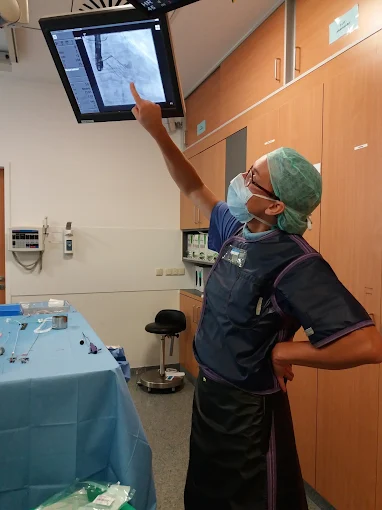
Coronary artery disease develops when the blood vessels supplying the heart muscle become narrowed or blocked, often due to cholesterol-rich plaque buildup. This can reduce blood flow to the heart and may cause chest pressure, shortness of breath, reduced exercise capacity, or, in some cases, a heart attack.
Importantly, symptoms are not always dramatic; some patients experience only vague discomfort, fatigue, nausea, or symptoms during physical or emotional stress. Early recognition and timely assessment can make a major difference, especially when chest pain is new, severe, or persistent.
Modern cardiology offers a wide range of diagnostic tools, from ECG and blood tests to cardiac imaging and coronary angiography. Treatment may include lifestyle changes, medication, coronary stents, or bypass surgery, depending on the individual situation.
Prevention remains central: controlling blood pressure, cholesterol, diabetes, smoking, weight, and physical inactivity can substantially reduce risk.
Cardiovascular prevention begins long before symptoms appear. Cholesterol, blood pressure, diabetes, smoking, family history, weight, kidney function, menopause-related factors, and lifestyle habits all contribute to a person’s overall risk.
LDL cholesterol is often called “bad cholesterol” because higher levels can contribute to plaque formation in the arteries over time. However, treatment decisions should not be based on one number alone; they should consider the whole risk profile.
Some patients benefit mainly from lifestyle changes, while others need medication to achieve safer cholesterol levels. Prevention also includes identifying hidden risk, such as early family history of heart disease or vascular disease in other parts of the body.
A personalised prevention plan can help patients understand what matters most for them and which changes are likely to bring the greatest benefit. The earlier risk is recognised and addressed, the more opportunity there is to protect heart and vascular health over the long term.
High blood pressure is one of the most common cardiovascular risk factors, but it often causes no symptoms for many years. Even when patients feel well, untreated hypertension can strain the heart, brain, kidneys, blood vessels, and eyes.
Accurate measurement is essential, because blood pressure can vary between the clinic, home, work, and sleep. Resistant hypertension means that blood pressure remains above target despite appropriate treatment with several medications, or that many medications are needed to keep it controlled.
In such cases, it is important to check measurement technique, medication adherence, salt intake, sleep apnoea, kidney disease, hormonal causes, and interactions with other medicines. Lifestyle measures — including weight management, regular activity, reduced salt intake, moderation of alcohol, and improved sleep — can support medical therapy.
Modern treatment is highly individualised, and small adjustments can sometimes make a large difference. The central question is not only whether blood pressure is “treated,” but whether it is truly controlled over time.
Heart failure does not mean that the heart has stopped working; rather, it means the heart is not pumping or filling as effectively as the body needs. Patients may notice breathlessness, fatigue, reduced ability to exercise, fluid retention, ankle swelling, or waking at night short of breath.
Cardiomyopathy refers to disease of the heart muscle itself and may be inherited, inflammatory, stress-related, rhythm-related, or linked to high blood pressure, valve disease, coronary disease, or other conditions. A careful diagnosis is important because different types of heart failure and cardiomyopathy require different treatment strategies.
Modern therapy can often improve symptoms, reduce hospital admissions, and help protect long-term heart function. Assessment may include blood tests, ECG, echocardiography, cardiac MRI, rhythm monitoring, or coronary evaluation.
Treatment can involve medication, lifestyle adjustments, device therapy, rhythm treatment, or valve intervention. The aim is not only to treat numbers on a scan, but to improve daily life, safety, and long-term prognosis.
Heart valve disease occurs when one or more of the heart valves become narrowed, leaky, or unable to open and close properly. Common examples include aortic stenosis, where the aortic valve becomes tight, and mitral regurgitation, where the mitral valve leaks backward.
Symptoms can develop slowly and may include shortness of breath, reduced stamina, dizziness, chest discomfort, palpitations, or swelling of the legs. Some patients are surprised to learn that significant valve disease can be present before obvious symptoms appear, which makes careful monitoring important.
Echocardiography is the key examination for assessing valve function, heart chamber size, and the impact of the valve problem on the heart. Treatment has changed considerably in recent years, with both surgical and catheter-based options available for selected patients.
The best approach depends on the valve involved, disease severity, age, symptoms, other medical conditions, and anatomical suitability. A structured evaluation helps determine whether watchful follow-up, medication, interventional therapy, or surgery is most appropriate.
Heart rhythm disorders can cause the heart to beat too fast, too slowly, or irregularly. Some rhythm problems are harmless, while others may increase the risk of fainting, stroke, heart failure, or sudden deterioration if left untreated.
Common symptoms include palpitations, racing heartbeat, skipped beats, dizziness, shortness of breath, chest discomfort, fatigue, or unexplained fainting. Atrial fibrillation is one of the most frequent rhythm disorders and is particularly important because it may increase stroke risk in some patients.
Diagnosis often requires capturing the rhythm at the right moment, using an ECG, Rhythm Holter monitor, event recorder, smartwatch tracing, or longer-term monitoring. Treatment depends on the type of arrhythmia, symptom burden, underlying heart disease, and individual risk factors.
Options may include reassurance, lifestyle changes, medication, anticoagulation, cardioversion, catheter ablation, or pacemaker therapy. The goal is to understand the rhythm problem clearly and choose a treatment plan that is both safe and tailored to the patient.
Menopause is not only a hormonal transition; it is also an important time to reassess cardiovascular risk. Around midlife, many women experience changes in blood pressure, cholesterol, body composition, sleep, mood, and glucose metabolism, all of which can influence heart health.
Symptoms such as chest discomfort, breathlessness, palpitations, fatigue, or reduced exercise tolerance should not automatically be attributed to stress or menopause alone.
A thoughtful cardiovascular assessment can help distinguish normal transition-related symptoms from signs that require further investigation. The goal is to replace uncertainty and myths with clear, practical, evidence-based guidance for long-term heart health.